
You know the feeling. An hour into the drive, your left arm starts complaining. By hour three, your elbow aches, your shoulder is creeping up toward your ear, and you're cycling through positions like none of them work. Because none of them do.
If that's you, two things are true. First, you're not fragile and you're not imagining it; the discomfort has well-documented causes. Second, it's fixable, and most of the fix is mechanical, not medical.
This guide walks through what's actually happening in your arm, why your vehicle's factory armrest is usually the culprit, and the three-part fix, in order of what to try first.
What's Actually Going On in Your Arm
Three mechanisms account for most driving-related arm discomfort.
Static muscle strain. Holding your arms in one position against vibration for hours is isometric work your muscles were never meant to sustain. Without support, your shoulder and forearm carry the full weight of your arm the entire drive, which is why the ache often shows up in the shoulder and neck even when the elbow is what hurts.
Pressure-point irritation. Drivers who perch an elbow on a hard, narrow surface for long stretches can irritate the bursa, the small cushioning sac in the joint. Truckers have a name for the resulting pain, and it's common enough that occupational health guidance specifically recommends resting the elbow only on well-cushioned surfaces.
Nerve compression. The ulnar nerve runs close to the surface at the inside of the elbow (the funny bone), and sustained pressure on it is what causes that numb, tingling ring and pinky finger. NYU Langone specifically lists long-distance drivers who rest an elbow on the window edge among the people most prone to it, and their first prevention advice is simple: stop leaning on the hard spot.
Notice the common thread. All three come back to how and where your arm is supported. Which brings us to the part of your vehicle that's supposed to handle that job.
The Real Culprit: Your Armrest Was Never Designed for This
Factory door armrests are built to a price point and an average, and they miss on three dimensions at once.
Too low. If the support sits below your natural elbow height, you either slump toward the door to reach it or drive with your arm unsupported. Occupational ergonomics research connects poor workstation fit and prolonged awkward postures to exactly the kind of cumulative strain drivers report.
Too hard. Most door panels offer a strip of plastic with a skin of padding. Concentrating your arm's weight on a firm, narrow edge is the pressure-point problem in its purest form.
Too narrow. A surface a few inches long forces your elbow to carry everything. A longer surface lets your forearm share the load, which changes the pressure math entirely.
The center console doesn't rescue you either. It supports the right arm at best, it's often the wrong height too, and for plenty of drivers (anyone with a laptop mount, radio stack, or a console full of gear) it's not available at all. Which is why the left arm and the door panel are where this problem lives.
The Fix, in Order
Step 1: Dial In Your Seat
Before buying anything, get the geometry right. Sit with your hips all the way back, seat back around 100 degrees, close enough that your wrists can rest on top of the wheel with straight arms. Driving position experts converge on a relaxed elbow bend of roughly 100 to 120 degrees at the wheel, with shoulders down and back against the seat. If you've been sitting movie-chase-scene far from the wheel with locked elbows, this step alone will help.
Step 2: Change the Habits
Take breaks on long hauls and use them to move: roll the shoulders, extend the elbows, open and close your hands. Vary your grip position rather than clamping at one spot for hours. And stop perching the bony point of your elbow on the window ledge; that's the specific habit the nerve specialists warn about.
This is all good advice, and it's where most articles on this topic end. It's also incomplete, because posture and breaks don't change the fact that your arm still has nowhere good to rest for the other 95 percent of the drive.
Step 3: Fix the Surface
The structural fix is giving your arm what the factory didn't: support at the right height, with real padding, across a surface long enough to spread the load from your elbow through your forearm.
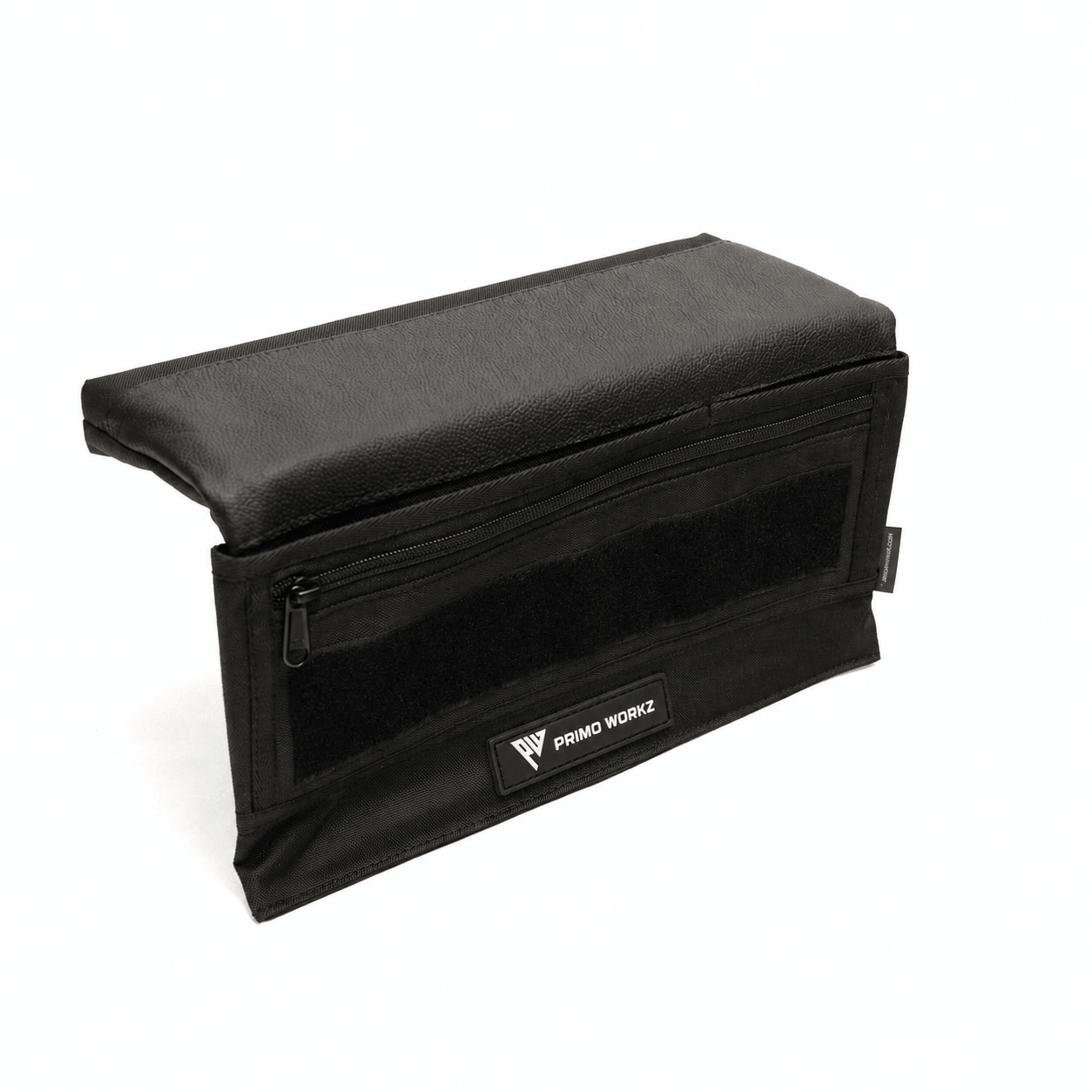
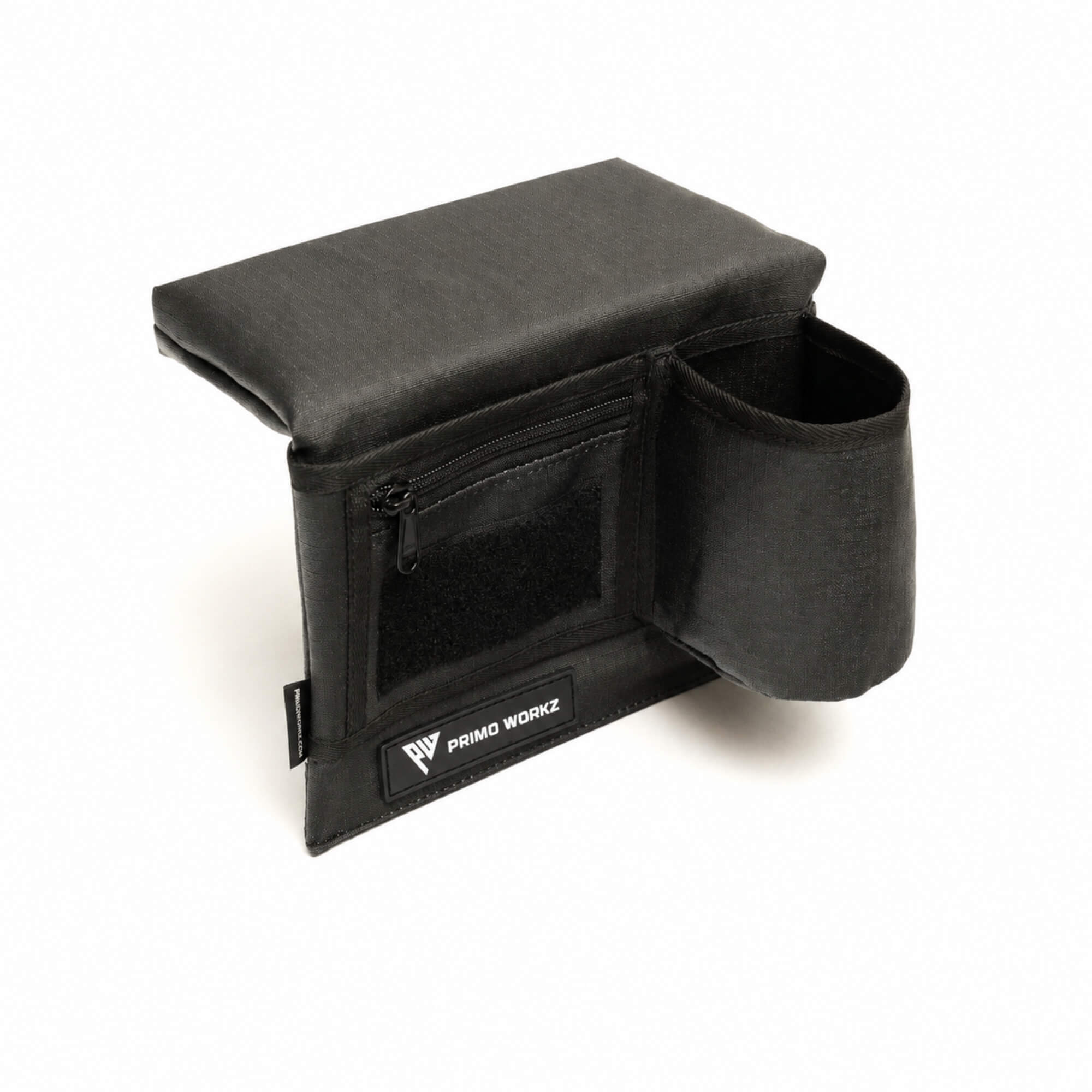
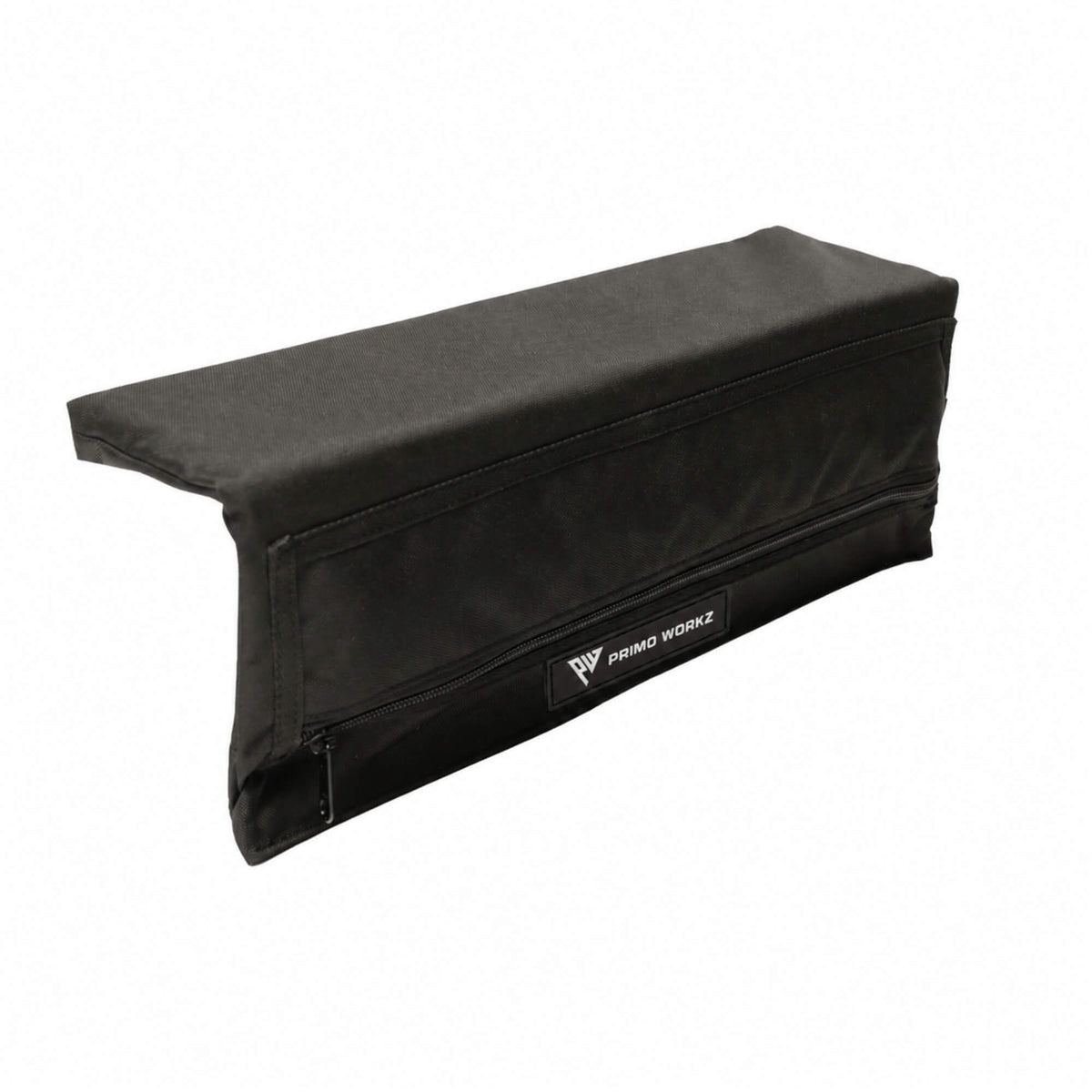
That's the entire design brief behind our Armrest Max. It's a 13 inch padded leather armrest that mounts over your door panel with a bendable stainless steel core. You shape the core to your door and your preferred height once, slide it on, and it's installed; about ten seconds, no tools, no drilling, no adhesives, and it comes off just as fast. Because you set the height, it solves the too-low problem for your body rather than an average one, and the length means your forearm shares the work your elbow point has been doing alone.

It fits cars, trucks, and SUVs, because door panels are universal even when comfort isn't. For tighter doors and smaller vehicles, the 9 inch Standard does the same job in a compact footprint.
To be clear about what this is: an armrest is a comfort upgrade, not a medical treatment. What it changes is the mechanical situation, the height, the padding, and the pressure distribution that the research keeps pointing at. If you have persistent pain or numbness, that's a conversation for a professional, not a product page.
Who Feels This Most
The longer and more repetitive your seat time, the faster the factory armrest problem compounds.
Commuters rack up ten-plus hours a week in the same position, which is a part-time job's worth of unsupported arm time. Route, delivery, and rideshare drivers live the problem at industrial scale, all day, every day, left arm on the door. First responders often lose the center console entirely to radios and laptop mounts, making the door panel the only arm support in the vehicle for a 12 hour shift. Sportsmen and overlanders front-load their trips with long pre-dawn hauls, then add washboard vibration on top.
If you're in one of those seats, the math on a proper armrest gets easy fast.
When to Talk to a Professional
Most driving-related arm discomfort improves when the mechanics improve. But persistent numbness or tingling in your fingers, pain that doesn't settle between drives, or weakness in your grip are signals worth taking to a doctor or physical therapist. Nerve issues respond best when they're addressed early, and no seat adjustment or accessory replaces an actual evaluation.
Arm Pain and Driving FAQ
Why does my arm go numb while driving? Sustained pressure on the ulnar nerve at the inside of the elbow is the usual suspect, especially if the numbness runs into your ring and pinky fingers. Hard window ledges and armrest edges are the classic causes. Cushioned, distributed support helps mechanically; persistent numbness deserves a professional look.
Is resting my elbow on the window bad? Doing it for long stretches on a hard edge is the specific habit specialists warn against. If you like driving with your arm on the door (most of us do), the fix is making that surface padded and properly sized rather than fighting the instinct.
My car's armrest is too low. Can I fix that? Height is the hardest problem to solve with cushion pads, which just soften the wrong position. A mounted armrest with adjustable positioning, like the Armrest Max's bendable core, lets you set support at your elbow height instead of the factory's guess.
Will an aftermarket armrest fit my car? The Armrest Max mounts by sliding over the door panel and shaping its core to fit, so it works across cars, trucks, and SUVs without drilling or adhesives. If you're unsure about your specific door design, contact us with your year, make, and model.
Does driving posture really matter that much? Yes, and it's free, which is why it's step one in this guide. Seat position sets the geometry; arm support carries the load. You want both.
The Bottom Line
Arm pain after driving isn't a toughness problem. It's a design problem: a support surface that's too low, too hard, and too short, multiplied by every hour you spend on it. Set your seat up right, build the break habits, and give your arm a surface actually built for the job.
We built the Armrest Max to be that surface, and it installs in the time it took you to read this sentence. Thirty-day risk-free trial, so the worst case is your door panel goes back to how the factory left it. We're betting you won't want it back.

Share:
The Tailgate Bag Buyer's Guide: How to Choose the Right One for Your Truck
The Complete Guide to Driving Comfort