

Nobody teaches you how to sit in a car. Driver's ed covers mirrors and blind spots, the owner's manual covers the buttons, and the rest you improvised at sixteen and never revisited. Then the drives got longer, the seat time added up, and your body started sending invoices: the stiff neck, the aching shoulder, the arm that goes numb somewhere past the county line.
Here's the good news. Driving comfort is not luck and it's not a more expensive vehicle. It's a setup, a handful of habits, and honest equipment where the factory cut corners. This guide covers all of it, in the order you should fix it. Twenty minutes in your driveway with this page open will change every drive you take afterward.
The 60-Second Setup Checklist
For the impatient, here's the whole guide compressed. Each item gets its full explanation below.
- Hips all the way back in the seat, no gap at the base of your spine
- Seat back at roughly 100 to 110 degrees, not bolt upright, not reclined
- Seat height so your hips sit level with or slightly above your knees, thighs supported
- Wheel distance set by the wrist test: straight arm, wrist rests on top of the wheel
- Elbows at a relaxed 100 to 120 degree bend, hands at 9 and 3
- Headrest centered behind your head, mirrors set from your final position
- Arm support at elbow height, padded, long enough for the forearm
- Move something every 20 to 30 minutes, stop every couple of hours
If any item on that list made you think "my car can't do that," skip ahead to the arm support section, because that's almost always the one.
Start With the Seat
Every other adjustment depends on the seat, so it goes first.
Push your hips all the way back. The base of your spine should meet the seat back with no gap. Most discomfort blamed on "bad seats" starts with a pelvis parked two inches forward of where it belongs, which rounds the lower back and cascades tension upward from there.
Recline slightly, not dramatically. A seat back around 100 to 110 degrees takes load off your spine while keeping your head naturally over your shoulders. Bolt upright transfers every bump straight up your back; the gangster lean puts your neck in a permanent crane.
Set the height and depth for your legs. Hips level with or a touch above your knees, with the seat pan supporting as much thigh as possible without pressing into the back of your knees. Dead legs on hour three usually trace back to this adjustment, not to circulation problems you need to worry about.
Empty your back pockets. A wallet under one side of your pelvis tilts your whole spine for the entire drive. It sounds trivial. It isn't.
Then the Wheel
Use the wrist test for distance. With your shoulders against the seat, extend one arm straight over the wheel. Your wrist should land on top of the rim. Closer than that and you're cramped; farther and you're reaching, which locks your elbows and loads your shoulders. Racing drivers sit close for a reason, and it isn't style.
Bend, don't lock. At your grip, your elbows should hold a relaxed bend of roughly 100 to 120 degrees. Straight-armed driving looks relaxed and is the opposite; locked joints transmit vibration instead of absorbing it.
Hands at 9 and 3, loosely. A death grip fatigues your forearms and feeds tension up the chain. Hold the wheel like a coffee cup, not a pull-up bar, and vary your grip on long stretches.
Wheel height: low enough to see the gauges, high enough that your hands sit at or below shoulder level. Hands above shoulders is an isometric shoulder raise you'll pay for by lunch.
Mirrors and Headrest: Your Posture Alarm
Set your mirrors last, from your final, correct seating position, and then treat them as an alarm system. If you find yourself adjusting a mirror mid-trip, your posture drifted; fix the posture, not the mirror. The headrest should center behind your head, close enough that you don't have to reach back for it. That's a safety item first and a neck-tension item second.
Arm Support: Where Factory Design Fails You
Everything above is free, and you should do all of it. Now for the part your vehicle probably can't do on its own.
Your arms weigh roughly five percent of your body weight each. Unsupported, that load hangs off your shoulders and neck for the entire drive, which is why "my shoulder is killing me" and "my arm aches" are usually the same problem wearing different symptoms. Support the arm and the whole upper body relaxes. This is exactly why occupational ergonomics treats workstation fit and pressure distribution as injury-prevention fundamentals, not comfort luxuries.
The problem is what your vehicle offers as support. The center console, if it's free of gear and at a usable height, covers one arm at best. The door panel, where your left arm actually wants to live, was built to a price point: a support surface that is typically too low (so you slump to reach it), too hard (so your elbow takes concentrated pressure on a firm edge), and too narrow (so the elbow point carries everything your forearm should share). We broke down the full mechanics, including the nerve-compression issue specialists warn drivers about, in our guide to why your arm hurts after driving.
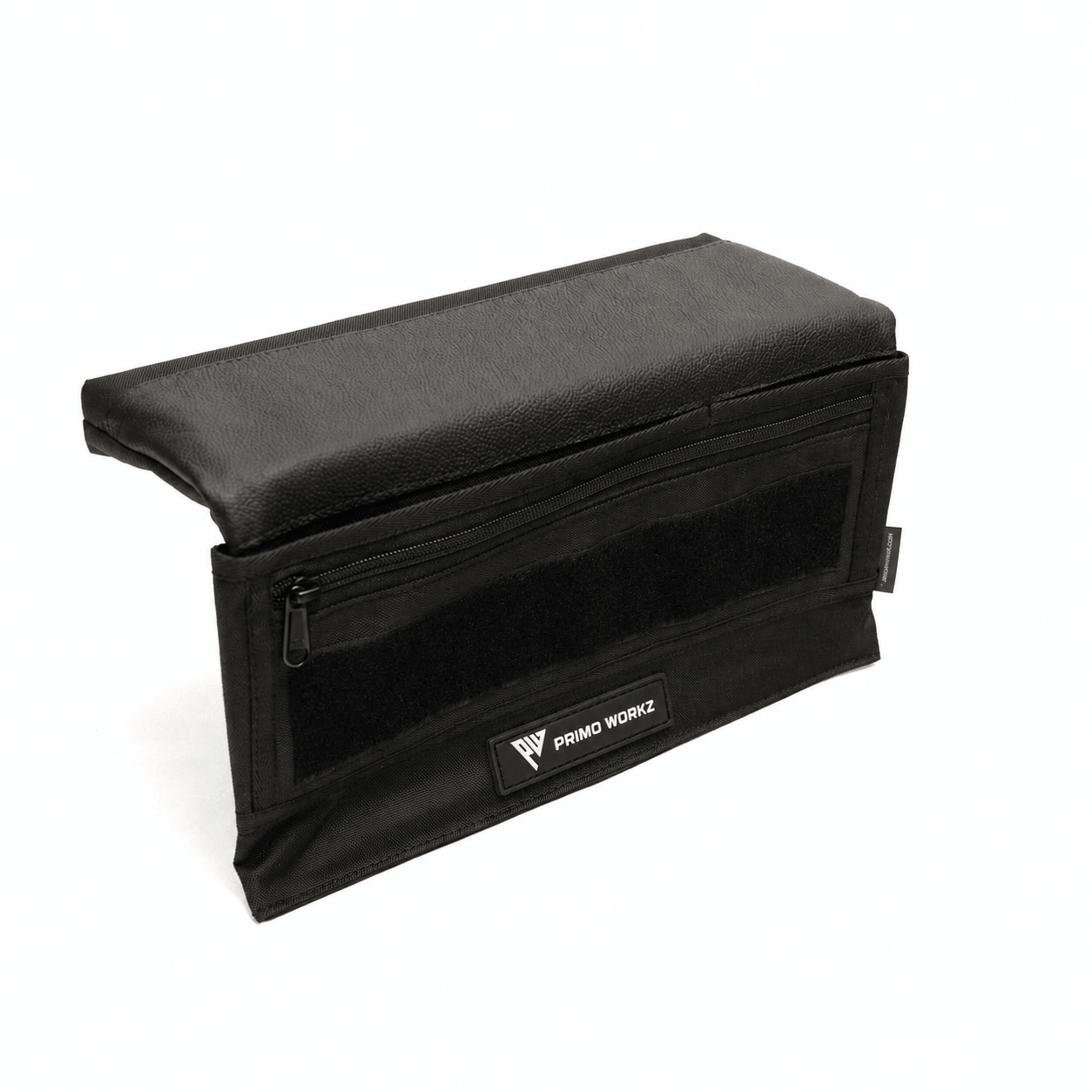
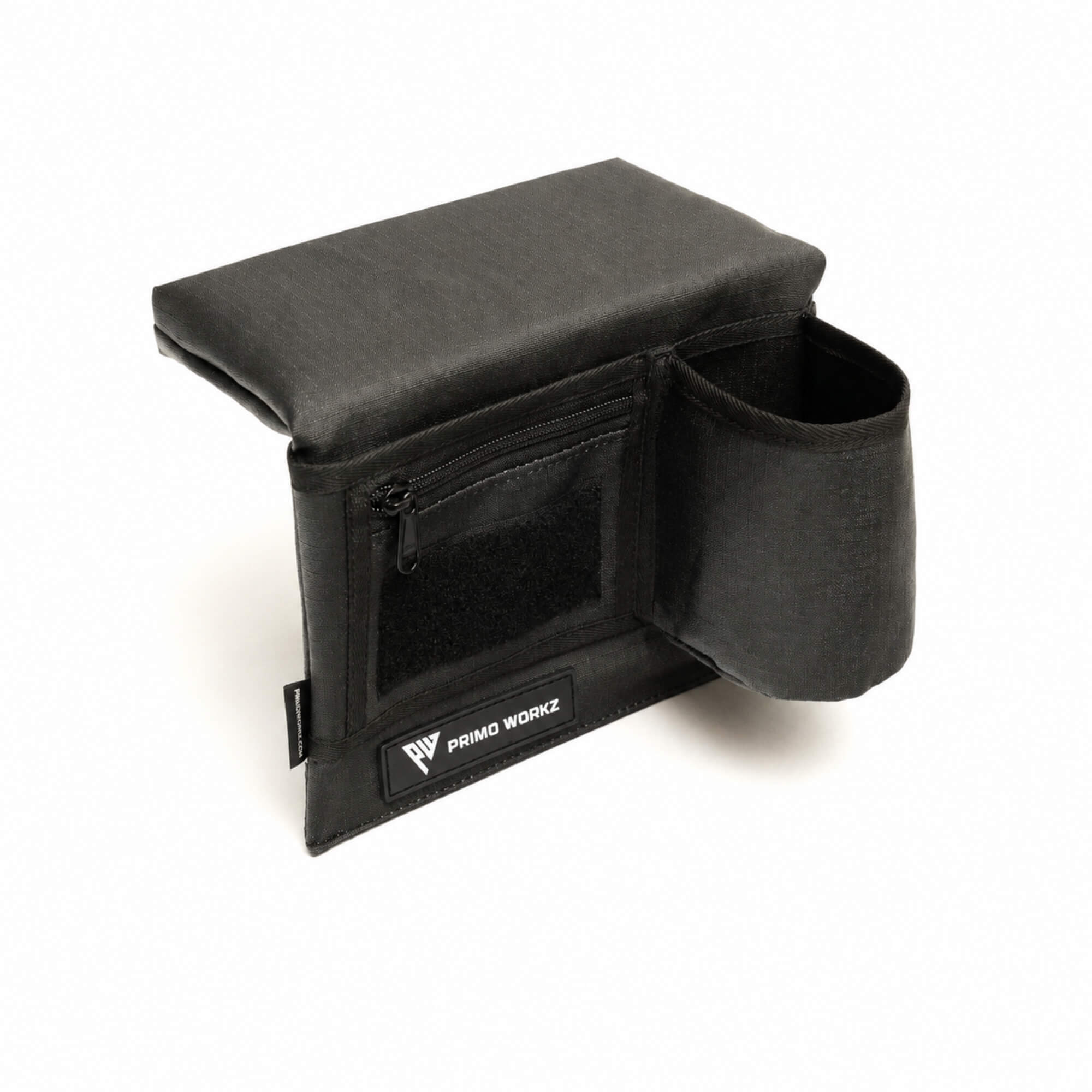
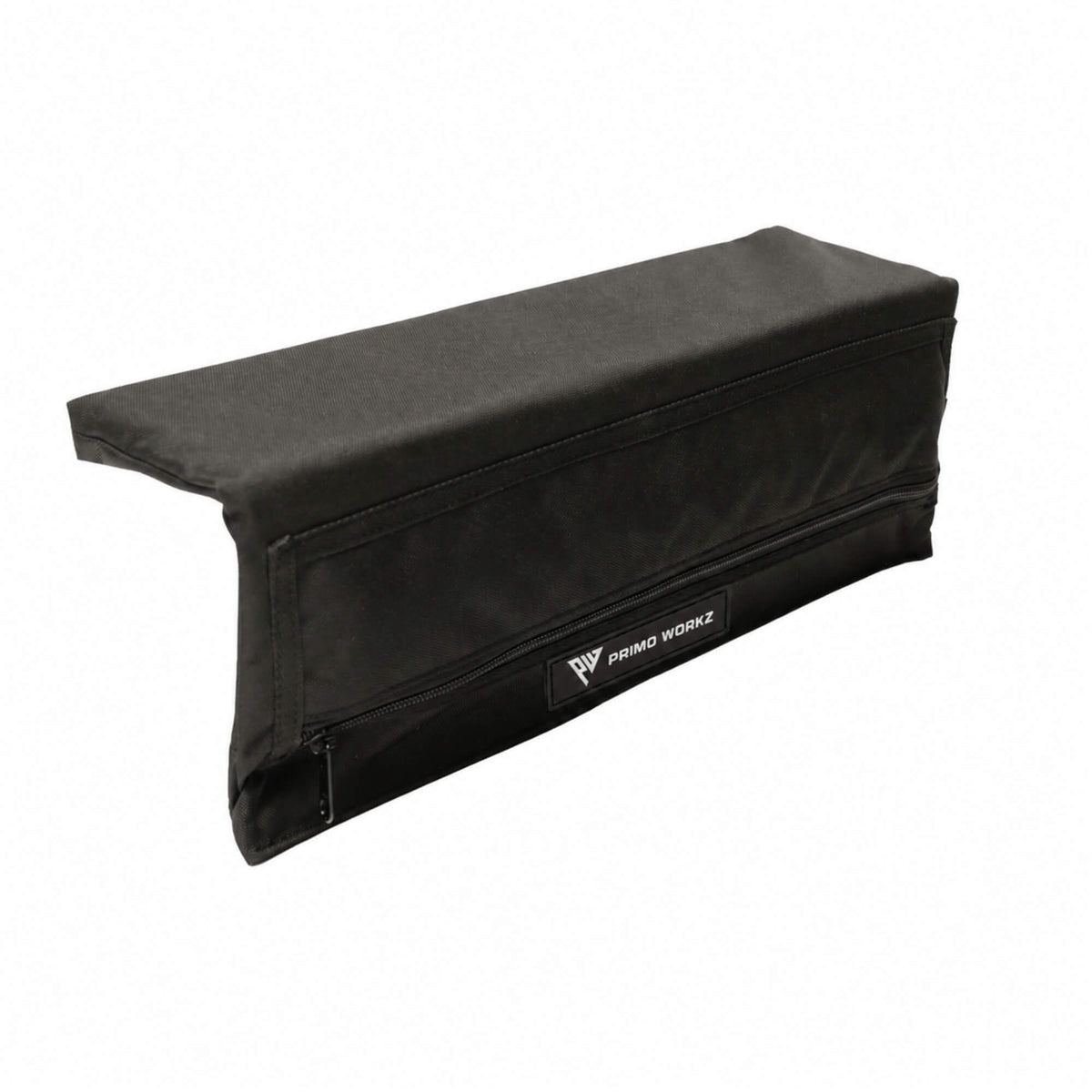
The fix is a surface built for the job, and it's the reason we built the Armrest Max. Thirteen inches of padded leather over a bendable stainless steel core that you shape once to your door and your elbow height, then slide on. Ten seconds, no tools, no drilling, no adhesives, and it fits cars, trucks, and SUVs alike. Height set to your body instead of an average, padding instead of a plastic edge, and enough length that your forearm shares the load. For narrower doors, the 9 inch Standard runs the same design in a compact footprint.
One honest note, and it applies to this whole guide: comfort equipment reduces fatigue and supports better positioning. It doesn't treat medical conditions, and persistent pain or numbness belongs in front of a doctor or physical therapist, not a product page.
Your Back on Long Drives
If your seat has adjustable lumbar, set it so it fills the curve of your lower back without pushing you forward; it should feel like contact, not pressure. No lumbar adjustment? A small rolled towel at your belt line does 80 percent of the job for zero dollars. The goal either way is keeping the natural curve your spine loses when you slump, because a supported lower back is what allows the relaxed upper body everything else in this guide is building toward.
Movement Is Part of the Setup
The best driving position still fails if you hold it like a statue. Static posture is the root problem, so build movement into the drive itself.
At the wheel, every 20 to 30 minutes: roll your shoulders, open and close your hands, change your grip position, extend each elbow. Small resets, done often, beat heroic stretching sessions done rarely.
Stopped, every couple of hours: get out, walk two minutes, reach overhead, let your eyes focus on something farther than a windshield. Fuel stops are free physical therapy if you use them.
On washboard and trail: vibration multiplies everything in this guide. Slow down a notch, loosen your grip, and let padded contact points absorb what your joints otherwise would.

Setups for the Seats That Work Hardest
Work vehicles and first responders. When radios, laptop mounts, and control heads take the center console, the door panel becomes the only arm support in the vehicle, for shifts that run ten hours or more. Every principle above applies double, and the arm support section stops being optional. We're building dedicated resources for duty vehicles; in the meantime, the setup checklist plus a proper door armrest covers the fundamentals.
Road trips and towing. Set up before you leave, not at the first fuel stop, and re-check after driver swaps; a shared vehicle set for the other driver undoes everything. Towing adds constant micro-corrections at the wheel, which makes the loose grip and the elbow bend matter more, not less.
High seat-time work: delivery, rideshare, sales routes. Treat your driving position the way an office worker should treat a desk, because it is your desk. The 20-to-30 minute movement rhythm matters most here, and so does arm support, since route work means the same arm on the same door panel all day.
Drivers managing arthritis, old injuries, or just more birthdays. Cushioned, distributed support and a neutral position reduce the daily toll, and every adjustment in this guide favors joints over willpower. Set the vehicle up so the easy position is the right one.
What to Fix First
If you do nothing else, do these three in this order. Fix your seat with the wrist test and the 100 to 110 degree recline, because geometry is free and upstream of everything. Build the 20-minute movement habit, because no static position survives four hours. Then fix your arm support, because it's the one piece of the ergonomic picture your vehicle didn't ship with, and it's the difference between a setup that looks right and one that feels right at hour five.
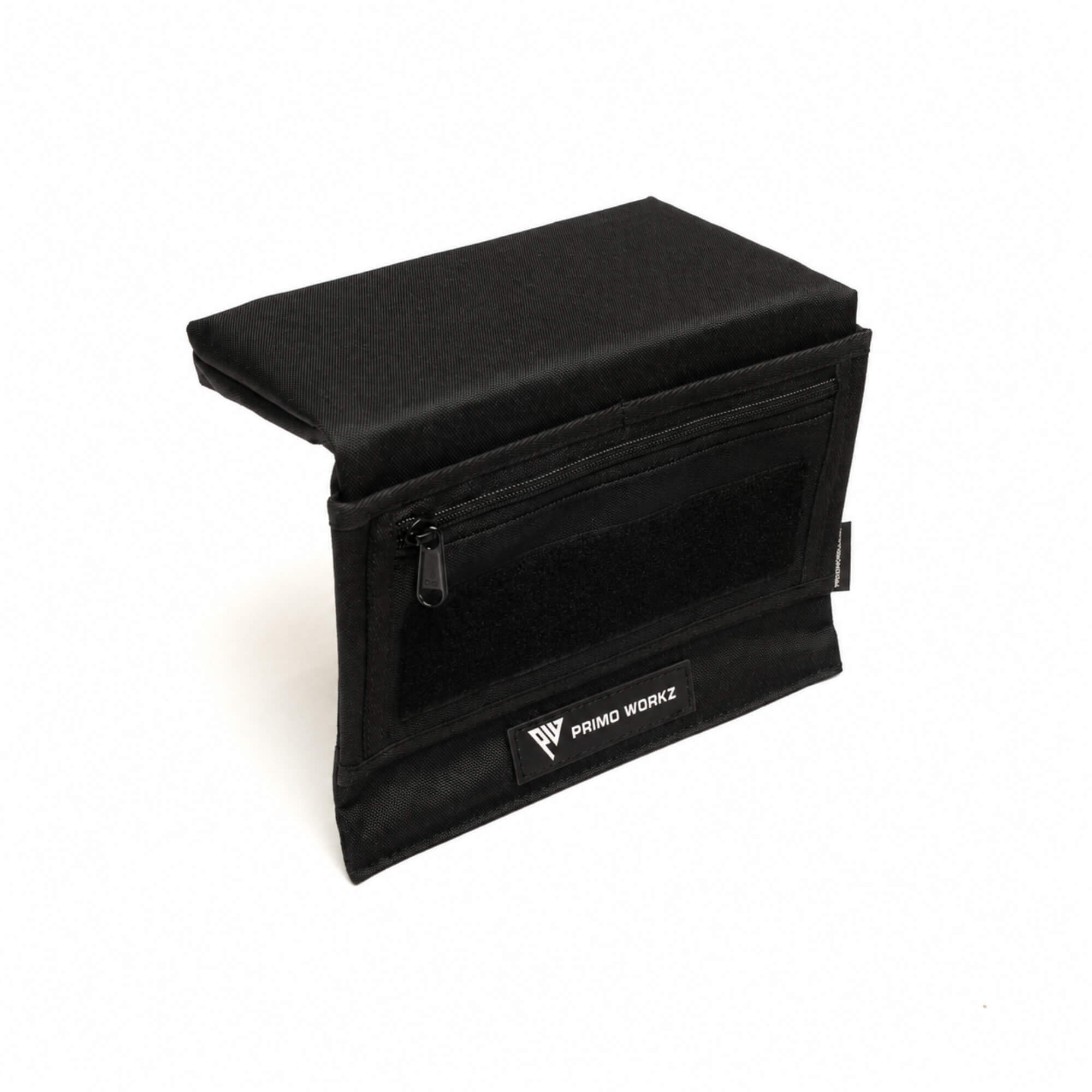
Your truck's cargo problems, incidentally, get the same treatment in our tailgate bag buyer's guide. We have opinions about every part of the vehicle you actually touch.
Driving Comfort FAQ
What is the most comfortable driving position? Hips all the way back, seat back around 100 to 110 degrees, thighs supported, wheel set by the wrist test, elbows at a relaxed 100 to 120 degree bend, shoulders down. The checklist at the top of this guide walks the full sequence.
Why do long drives make my body ache? Sustained static posture is work your muscles weren't built for. Holding position against vibration for hours creates cumulative strain, and the unsupported spots (usually the left arm and the shoulder above it) collect the worst of it.
How often should I take breaks on a long drive? A short stop every couple of hours, plus micro-movements at the wheel every 20 to 30 minutes: shoulder rolls, grip changes, hand stretches. Frequent and small beats rare and long.
Does an armrest actually make a difference? When it's at the right height, padded, and long enough to support the forearm rather than just the elbow point, yes, and the effect shows up in your shoulder and neck as much as your arm. That combination is exactly what factory door panels miss, and exactly what the Armrest Max was built to add.
Is it bad to rest my elbow on the car door? On a hard, narrow edge for hours, yes; that's the habit nerve specialists specifically flag. On a padded, properly sized surface, the door is a perfectly good place for your arm to live. The surface is the variable, not the habit.
The Bottom Line
Comfort behind the wheel is a system: seat geometry, a loose grip, moving parts that actually move, and support surfaces that carry what your shoulders shouldn't. The factory got you most of the way there and stopped where the accountants said stop.
We build the parts they skipped. Set your seat up tonight, and if your door panel is the weak link, the Armrest Max installs in ten seconds and comes with a 30-day risk-free trial. The drive you take tomorrow should feel different by breakfast.


Written by the Primo Workz team.
Share:
Why Your Arm Hurts After Driving (And How to Fix It)