
Every truck owner eventually runs into the same problem. The cab fills up with trail trash, wet gear, muddy boots, or firewood, and none of it belongs inside with you. The bed works until the first washboard road scatters everything you didn't strap down.
A tailgate bag solves this. It mounts to the back of your truck, keeps the dirty stuff outside the cab, and gives you dedicated exterior storage you can reach without climbing into the bed. But the category has a reputation problem: most tailgate bags sag, fade, and fall apart within a season or two.
This guide covers what a tailgate bag actually does, how it compares to spare tire bags, and what separates gear that lasts a decade from gear that quits by August.

What Is a Tailgate Bag?
A tailgate bag is an exterior-mounted storage system that attaches to the tailgate of your truck. It carries trash, recovery gear, firewood, wet clothes, and dirty equipment outside the cab and bed, where mess and odor belong.
The concept borrowed from the spare tire trash bags that Jeep and 4Runner owners have run for years. The difference is fitment: trucks don't carry a rear-mounted spare, so a tailgate bag mounts flat against the tailgate itself, using the largest unused surface on the vehicle.
Done right, that mounting position is an advantage. Weight rides close to the truck, rear visibility stays clear, and the bag doesn't interfere with a hitch, bumper, or backup camera the way some swing-out solutions do.
Tailgate Bag vs. Spare Tire Bag: Which One Do You Need?
The answer depends on what's bolted to the back of your rig.
Run a tailgate bag if you drive a pickup. Trucks have no rear spare to strap a bag to, and draping a spare tire bag over a tailgate is a compromise that scratches paint and never sits right. A purpose-built tailgate bag mounts flush, opens with the tailgate, and doesn't fight the truck's geometry.
Run a spare tire bag if you drive a Jeep, Bronco, 4Runner, or anything with a rear-mounted spare. The tire is a natural mounting point, and a well-built spare tire bag uses it without blocking your camera or plate.
Some setups justify both: a tailgate bag on the truck for camp trash and recovery gear, a spare tire bag on the trail rig. If you're outfitting one vehicle, match the bag to the mounting surface you actually have.
Why Most Tailgate Bags Fail
Cheap tailgate bags fail in predictable ways, and once you know the failure points, they're easy to spot in a product listing.
They sag. Soft-sided bags have no internal structure. Load one with a weekend's worth of camp trash and it slumps into a shapeless sack that's hard to load, harder to close, and constantly shifting against your paint.
They fade and break down. Untreated fabric cooks in the sun. Within a season, black turns gray, coatings flake, and the material tears where the straps pull.
They scratch your truck. Exposed metal hardware, abrasive backing, and loose buckles grind against paint on every washboard mile. A bag that saves your cab but sandblasts your tailgate isn't saving you anything.
The hardware quits first. Zippers corrode, stitching pulls out at stress points, and plastic clips snap in cold weather. The fabric usually outlives the components holding it together.
Every one of these is a materials and engineering decision, which means every one of them is avoidable.
What to Look For in a Tailgate Bag
Use this checklist whether you're buying from us or anyone else.
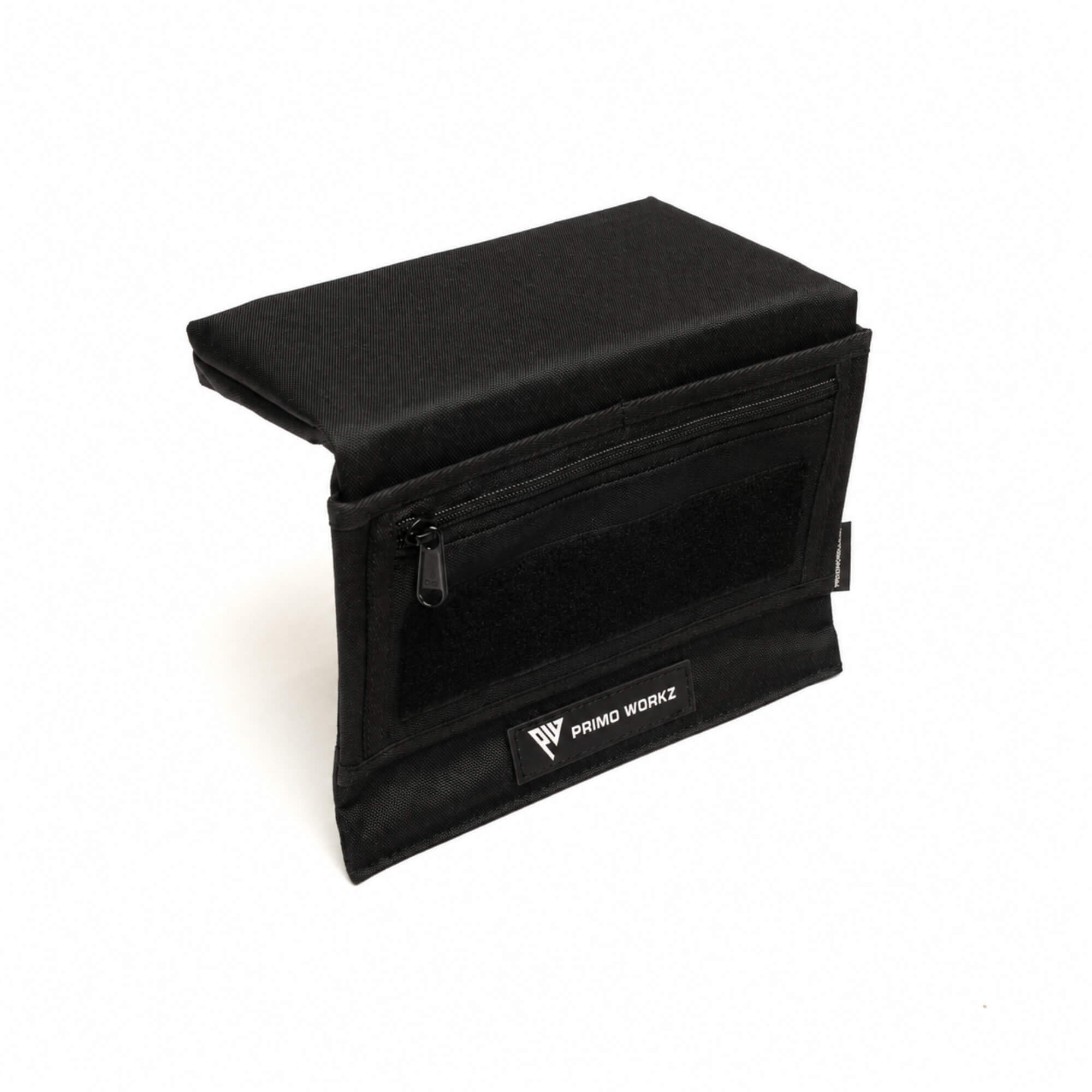
Structured construction. The bag should hold its shape empty or full. A stiffened back panel and reinforced bottom keep the opening accessible and the load stable, so you're not wrestling a collapsed sack at the end of a long day.
Weatherproof materials. Look for heavy-duty ripstop with UV and water-resistant coating, and genuine YKK zippers with weather sealing. Coated fabric sheds rain and trail dust; sealed zippers keep it out of your gear.
A paint-safe mounting system. The contact surface matters more than the bag. Non-abrasive backing and a secure mounting pad protect your tailgate's finish. No exposed metal should ever touch paint.
Tool-free attachment and removal. You'll take the bag off to clean it, to load lumber, or to hand it to a buddy for a trip. Quick-release hardware that clips on and off in seconds is the difference between gear you use and gear that lives in the garage.
Tailgate access with the bag mounted. This is the spec most buyers miss. A pivoting design lets the bag swing clear when you drop the tailgate, so you're not unstrapping everything to grab a cooler from the bed.
Drainage. Wet gear and melting ice need somewhere to go. Integrated grommets in the base let the bag drain instead of marinate.
Real capacity. A useful tailgate bag holds a 12 to 14 gallon load: a full camp trash bag, a weekend's recovery gear, or an armload of firewood. Anything smaller is a glorified pouch.
How We Built Ours

We designed the Primo Workz Tailgate Cargo Bag around the failure points above, because we got tired of replacing bags that couldn't hold up.
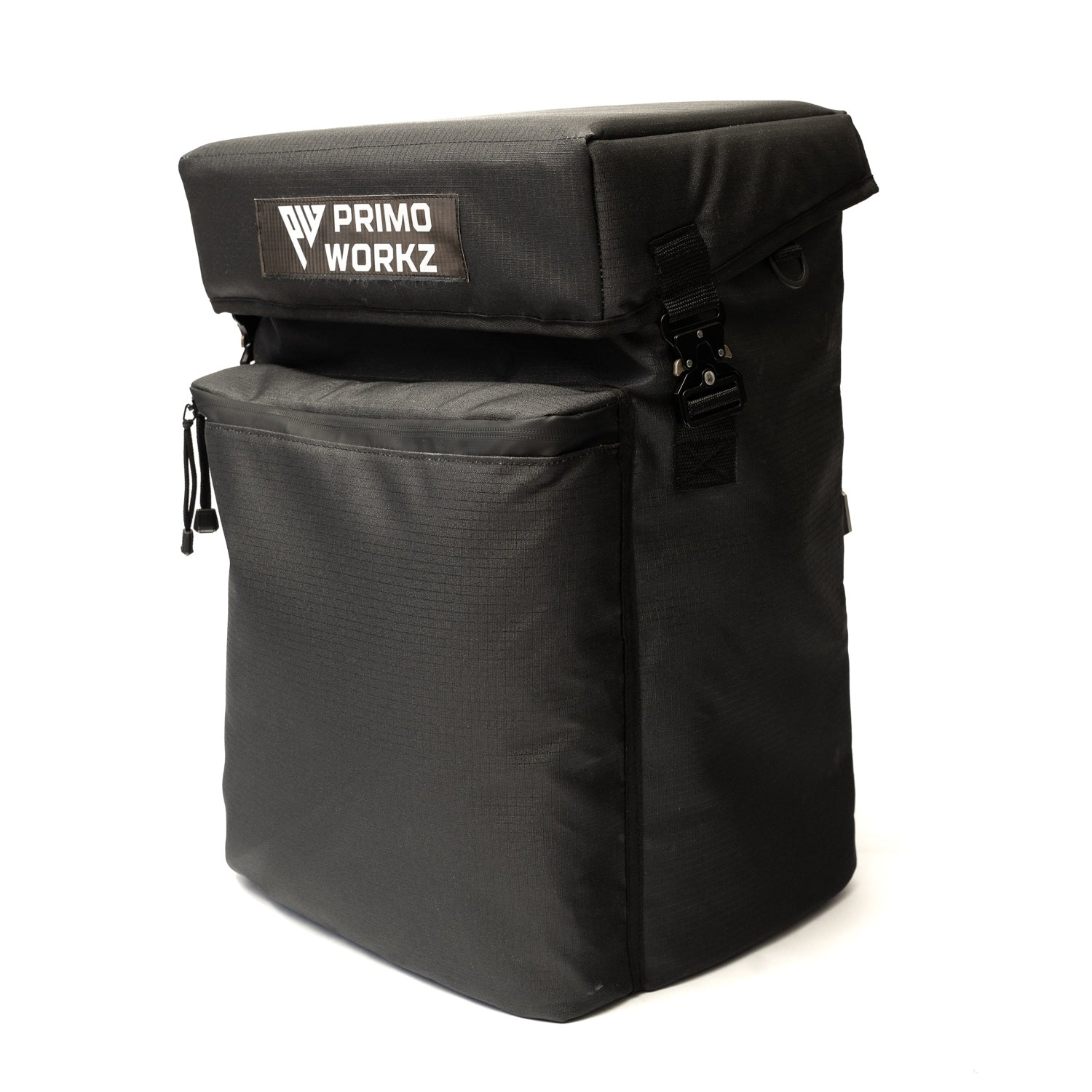
The shell is heavy-duty ripstop with UV and water-resistant coating over a PVC-lined interior, closed with weatherproof YKK zippers. A stiffened back panel and reinforced bottom keep the bag upright and structured under load, so it never slumps into your paint or collapses mid-trip.
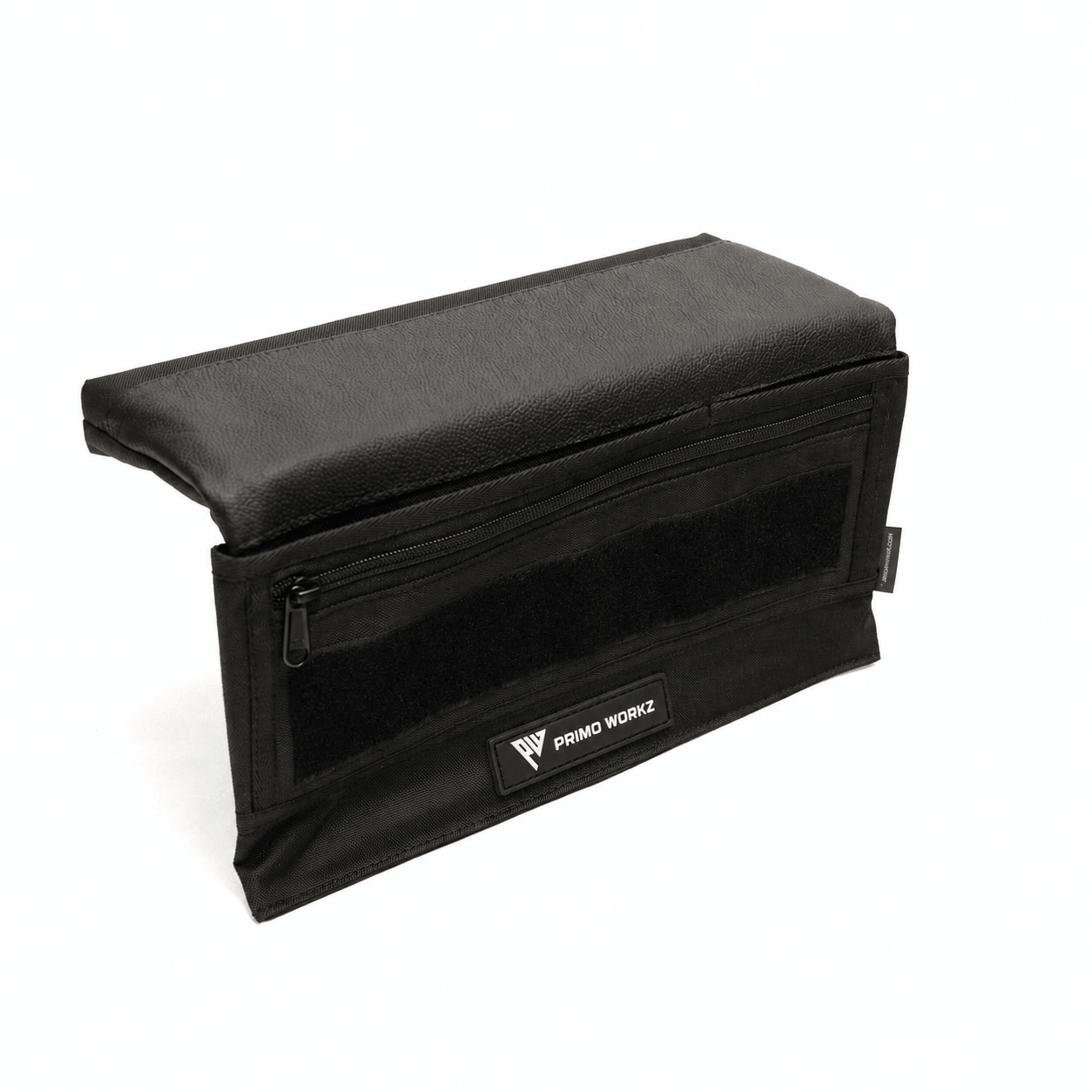
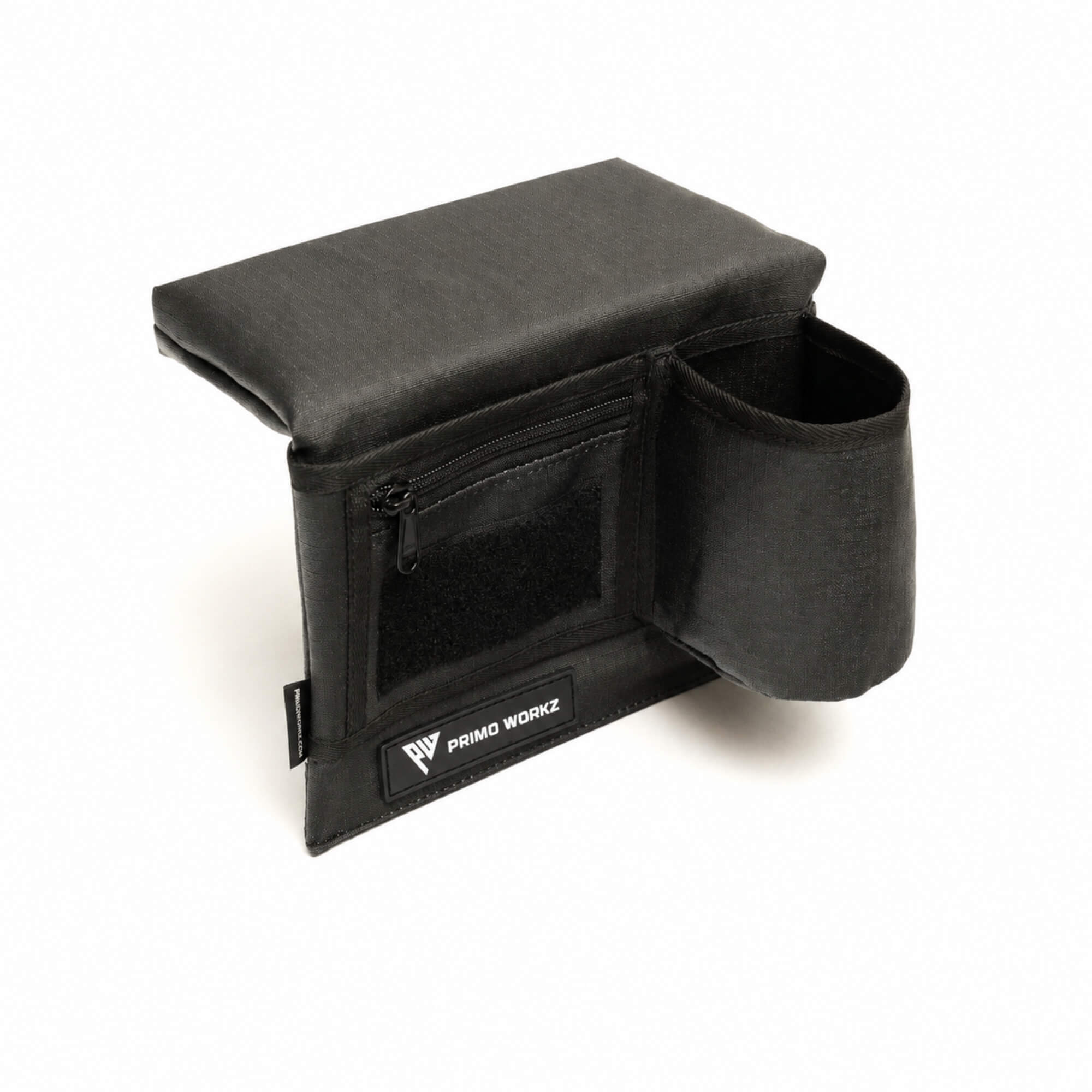
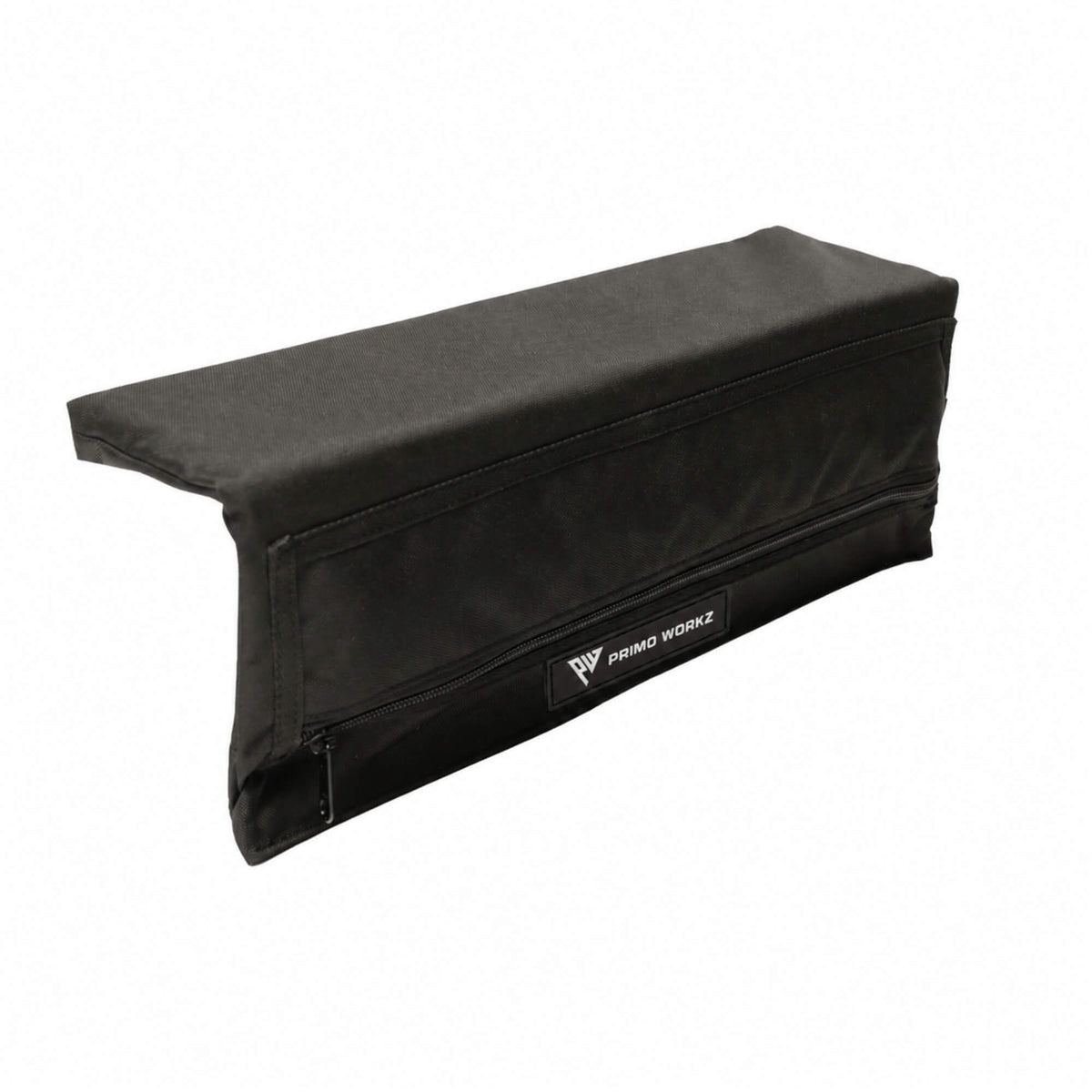
The mount is where it separates from the field. A Gecko webbing mounting pad grips the tailgate with a soft-touch, scratch-free backing, and four quick-release clips attach or remove the bag in seconds. No drilling, no adhesives, no exposed hardware against your finish. Release the two lower clips and the bag pivots with the tailgate, so the bed stays accessible with everything still mounted.
It comes in two sizes. The Small runs 12 gallons and fits shorter or narrower tailgates cleanly. The Large runs 14 gallons for full-size rigs that want maximum capacity; on some trucks it sits low enough that you'll lift the bottom edge when dropping the tailgate, which is the honest tradeoff for the extra volume. A front storage section keeps straps, gloves, or quick-access gear separate from the main cavity, and drainage grommets in the base handle whatever wet gear you throw at it.
Whether it's hauling camp trash out of a trailhead, keeping a limit of ducks and muddy waders out of the cab, or swallowing shore-lunch cleanup on the drive home, the job is the same: carry the mess, protect the truck, and still be standing next season.
Installation Takes About a Minute
Position the mounting pad on the tailgate, secure the straps, and clip the bag on. That's the whole job. No tools, no drilling, no permanent modification, and the bag comes off just as fast when you need the tailgate bare. The full walkthrough with photos is in our Tailgate Bag Install Guide.
Tailgate Bag FAQ
Will a tailgate bag scratch my truck's paint? A properly designed one won't. The Primo Workz mounting pad uses Gecko webbing with a soft-touch backing and no exposed metal contact points. Cheap bags with bare hardware or abrasive backing are a different story, which is why the mounting system should be the first spec you check.
Can I still open my tailgate with the bag attached? Yes. The pivoting design keeps the bag mounted while the tailgate drops. Release the lower clips and the bag swings clear, so you can load the bed without removing anything.
Is a tailgate bag waterproof? Ours is built from waterproof ripstop with weatherproof YKK zippers, which handles rain, mud, and trail dust. Like most exterior vehicle storage, it's designed to shed weather rather than survive submersion.
What size tailgate bag should I get? If your truck has a shorter or narrower tailgate, or you want the cleanest fit, go Small (12 gal). If you're running a full-size truck and want maximum hauling capacity, go Large (14 gal).
What can I carry besides trash? Recovery gear, firewood, wet waders, muddy boots, dirty tools, camp kitchen cleanup, decoy lines. If it's something you don't want riding in the cab, it belongs in the bag.
Does it work on SUVs or Jeeps? The tailgate bag is purpose-built for truck tailgates. If your vehicle carries a rear-mounted spare, our Spare Tire Bag is the right tool for that mounting surface.
The Bottom Line
A tailgate bag earns its place on your truck when it's built with structure, weatherproof materials, and a mount that protects your paint. Cut corners on any of those and you're buying the same bag twice.
We built ours to be the last one you need. See the full lineup in our tailgate bag collection, and if you're not sure it fits your rig, reach out. We'll tell you straight.

Share:
7 Best Trasharoo Alternatives That Actually Hold Up